Oklo natural reactor
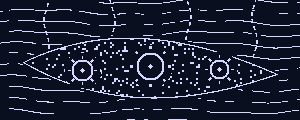
Oklo is a uranium deposit in Gabon where nuclear chain reactions started by themselves two billion years ago, switched on and off by groundwater.
In 1972, a routine check on uranium ore from Gabon, mined for French power plants, came up short. Its uranium-235 was 0.717 percent of the uranium, against 0.720 in natural uranium everywhere else. The missing atoms had been split two billion years ago, by reactors that started on their own in wet rock. It could not happen now: uranium-235 decays faster than the heavier isotope, and a share that was about 3 percent then is too thin today to keep a chain reaction going.
Sources
- Physical Review Letters 93, 182302
- Groopman et al., PNAS
- The Pulse of a Nuclear Reactor, APS Physics
- Ancient nuclear power controlled by water, Nature News
- Nature's Nuclear Reactors, Scientific American
- Barré, The Natural Reactors at Oklo (Gabon)
- Shlyakhter, Direct Test of the Time-Independence of Fundamental Nuclear Constants
Read next
- Kola Superdeep BoreholeA Soviet research hole sunk from 1970 and given up at 12,262 metres. Nothing has gone deeper straight down since: at that depth the rock is 180°C and stops behaving like rock.
- Optical atomic clocksAn optical atomic clock keeps time with ultracold atoms such as strontium. The best are now steady enough to register gravity changing across a single millimetre.
- XenobotsXenobots are living machines built from frog embryo cells to shapes designed by AI. Set among loose cells, they shove them into piles that grow into new xenobots.